
Complete Guide to Mold in Air Ducts Prevention Remediation Dallas TX
If you manage or own a property in Dallas, mold growth inside air ducts is a concern that demands serious attention. The Dallas–Fort Worth area’s humid subtropical climate creates persistent conditions for condensation inside HVAC systems, and when that moisture meets dust and organic debris already present in ductwork, mold spores find exactly what they need to establish and spread. Clean Air Dallas Pro works with residential and commercial property owners across Dallas to address mold in air ducts through prevention, inspection, and professional remediation — tackling not just the visible growth but the underlying moisture conditions that allow it to develop.
Estimated reading time: 14 minutes
Key Takeaways
- Dallas’s humid subtropical climate and long cooling seasons create ideal conditions for mold growth inside HVAC ductwork through persistent condensation.
- Mold requires moisture, a food source (dust and debris), and a surface to grow — removing any one of these factors significantly reduces the risk.
- Standard air duct cleaning and mold remediation are not the same service; active mold growth requires a more involved process including moisture source correction.
- Mold recurrence after cleaning is almost always tied to an unresolved moisture problem such as poor duct insulation, a clogged condensate drain, or leaky duct joints.
- Proactive prevention measures — including regular filter changes, drain line maintenance, duct insulation inspections, and humidity monitoring — are far more cost-effective than remediation.
- Professional evaluation is recommended when musty odors appear with HVAC operation, visible discoloration develops around vents, or occupants experience unexplained respiratory symptoms.
- Understanding the Risks of Mold in Dallas HVAC Systems
- What Causes Mold in HVAC Ducts Specifically in Dallas?
- How Do I Know If There Is Mold in My Air Ducts?
- A Common Mistake: Assuming All Duct Cleaning Addresses Mold
- How Is Mold Removed from Air Ducts Professionally?
- Can Mold in Air Ducts Affect Occupant Health?
- Why Does Mold Come Back After Duct Cleaning?
- Proactive Strategies for Mold Prevention in HVAC Systems
- Is Bleach a Safe DIY Solution for Mold in Air Vents?
- Comparing Residential and Commercial Remediation Needs
- How Dallas Property Owners Benefit from a Local, Detail-Oriented Approach
- When Should You Call a Professional for Duct Mold in Dallas?
- Frequently Asked Questions About Mold in Air Ducts
Understanding the Risks of Mold in Dallas HVAC Systems
Dallas summers routinely push outdoor temperatures above 95 °F while relative humidity can climb well beyond 60 percent, especially during late spring and early fall. According to the National Weather Service climate narrative for DFW, Gulf of Mexico moisture feeds into the region and sustains high humidity levels that persist for months at a time. Long-term engineering weather data published by NOAA for the Dallas–Fort Worth area confirms that these humidity conditions are not seasonal anomalies but sustained climate characteristics.
Inside a building, this means the temperature differential between cold conditioned air moving through ductwork and warm, humid air in unconditioned spaces like attics, crawl spaces, and wall cavities can produce condensation on duct surfaces and connections. That condensation, when combined with dust and debris that accumulates inside duct runs over months or years, creates exactly the environment mold needs. Understanding this local climate factor is the first step in any serious mold prevention and remediation strategy for Dallas properties.
How Mold Develops in Air Ducts
Mold requires three things to grow: moisture, a food source, and a surface. Inside a duct system, moisture can come from condensation, a leaking drain pan, poorly sealed duct joints, or high indoor humidity that the HVAC system cannot adequately control. The food source is often nothing more than ordinary household dust, skin cells, and other organic particles that settle inside the ductwork over time. The EPA confirms that moisture problems such as leaks and condensation are the underlying causes of indoor mold growth, and ASHRAE’s position document on limiting indoor mold and dampness identifies prevention of condensation inside HVAC components as essential to controlling microbial growth.
Regular maintenance through professional air duct cleaning services reduces the accumulation of dust and debris that serves as a food source for mold. When that organic layer is removed on a routine basis, one of the three growth requirements is significantly diminished — even if minor condensation occurs from time to time.
What Causes Mold in HVAC Ducts Specifically in Dallas?
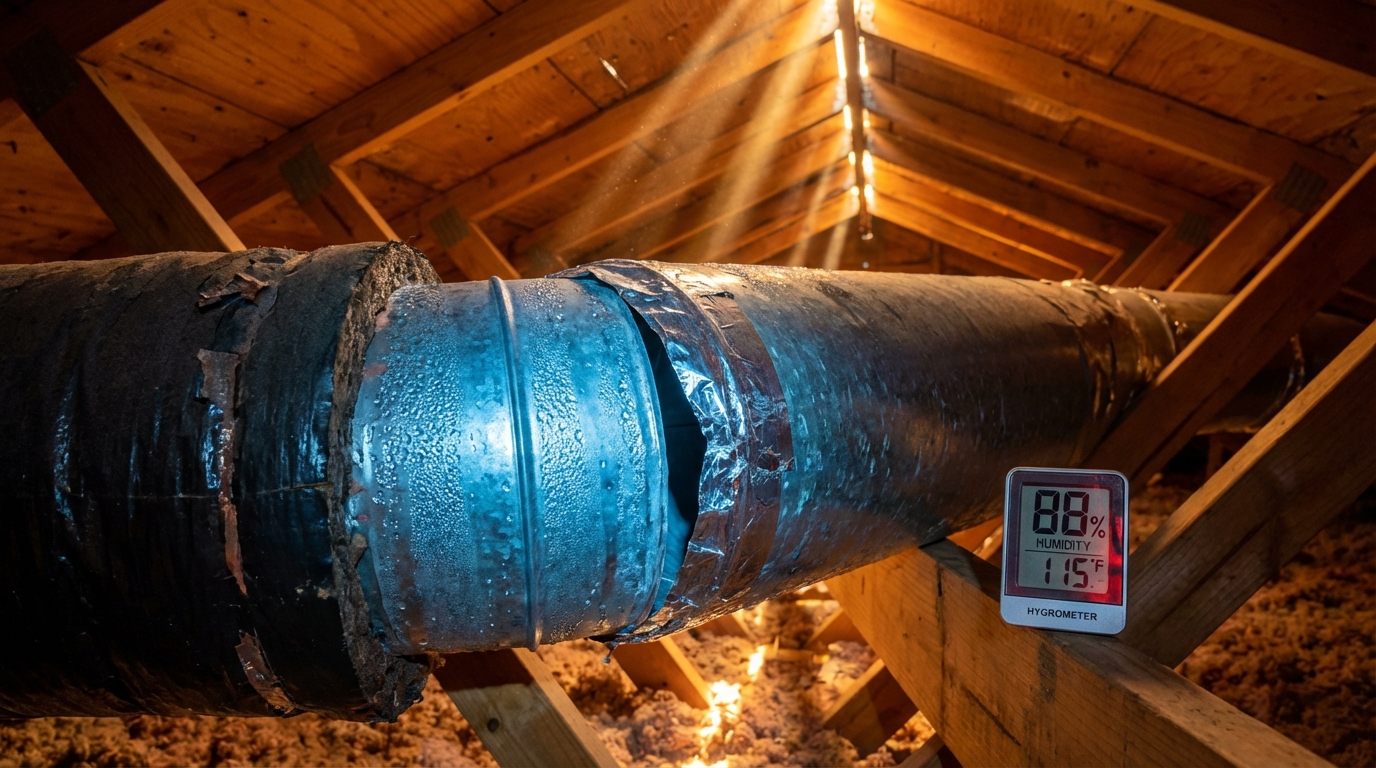
While the general science of mold growth applies everywhere, Dallas properties face a particular combination of risk factors. The long cooling season means air conditioners run for extended periods, generating condensation on evaporator coils and inside supply ducts continuously. If the condensate drain becomes partially blocked, or if the drip pan does not drain properly, standing water near the air handler can introduce moisture directly into the duct system.
Duct runs that pass through unconditioned attic spaces — extremely common in Dallas-area construction — are especially vulnerable. When outdoor temperatures reach 100 °F or higher and the attic rises even further, cold air inside supply ducts creates a sharp temperature differential on the duct exterior. Without adequate insulation and a properly sealed vapor barrier, condensation forms on or inside the duct. Over weeks and months, that repeated wetting creates ideal conditions for mold colonization. Poor duct sealing, oversized or undersized HVAC equipment, and clogged air filters all compound the problem by reducing airflow and allowing humidity to linger in the system.
Concerned about mold in your Dallas ductwork? Get a professional inspection before the problem spreads.
How Do I Know If There Is Mold in My Air Ducts?
Many property owners first notice a musty or stale odor that appears when the air conditioning or heating system cycles on, then fades when the system shuts off. That pattern suggests the odor source is somewhere within the duct system or near the air handler. Other common signs include visible dark spots or discoloration around supply registers, persistent dust that seems to reappear quickly after cleaning, and unexplained increases in allergy-like symptoms among occupants — particularly sneezing, nasal congestion, or eye irritation that improves when leaving the building.
It is worth noting that not every dark spot is mold. Dust buildup, soot from candles, or residue from cooking can also discolor vent covers. However, if discoloration is accompanied by a damp or musty smell, or if the area around the register feels moist, professional inspection is a sensible next step. Mold can also grow deep inside ductwork — on interior duct lining, at flex duct connections, near evaporator coils, or inside the air handler cabinet — where it is not visible without specialized equipment.
A Common Mistake: Assuming All Duct Cleaning Addresses Mold
One of the most frequent misunderstandings among property owners is the assumption that standard air duct cleaning and mold remediation are the same service. They are not. Standard duct cleaning focuses on removing accumulated dust, debris, and particles from the interior surfaces of the duct system. It improves airflow, reduces particulate circulation, and supports better HVAC efficiency. However, if active mold growth is present, standard cleaning alone may not fully resolve the problem.
Mold remediation in air ducts is a more involved process. According to EPA guidance on duct cleaning, if insulated duct sections have become moldy, the affected insulation generally needs to be removed and replaced — not simply wiped down. The EPA’s commercial building remediation guide further outlines containment procedures designed to prevent mold-laden dust from spreading to occupied areas during the cleanup process.
| Factor | Standard Duct Cleaning | Mold Remediation |
|---|---|---|
| Primary goal | Remove dust, debris, and particulates | Eliminate active mold growth and prevent recurrence |
| Moisture source investigation | Not typically included | Essential part of the process |
| Containment procedures | Generally not required | May include isolation barriers and negative air pressure |
| Insulation handling | Surface cleaning only | Removal and replacement of moldy insulation |
| Post-service verification | Visual and airflow check | May include clearance evaluation or air quality testing |
| When appropriate | Routine maintenance, dust buildup, pet dander | Confirmed or suspected active mold growth |
How Is Mold Removed from Air Ducts Professionally?
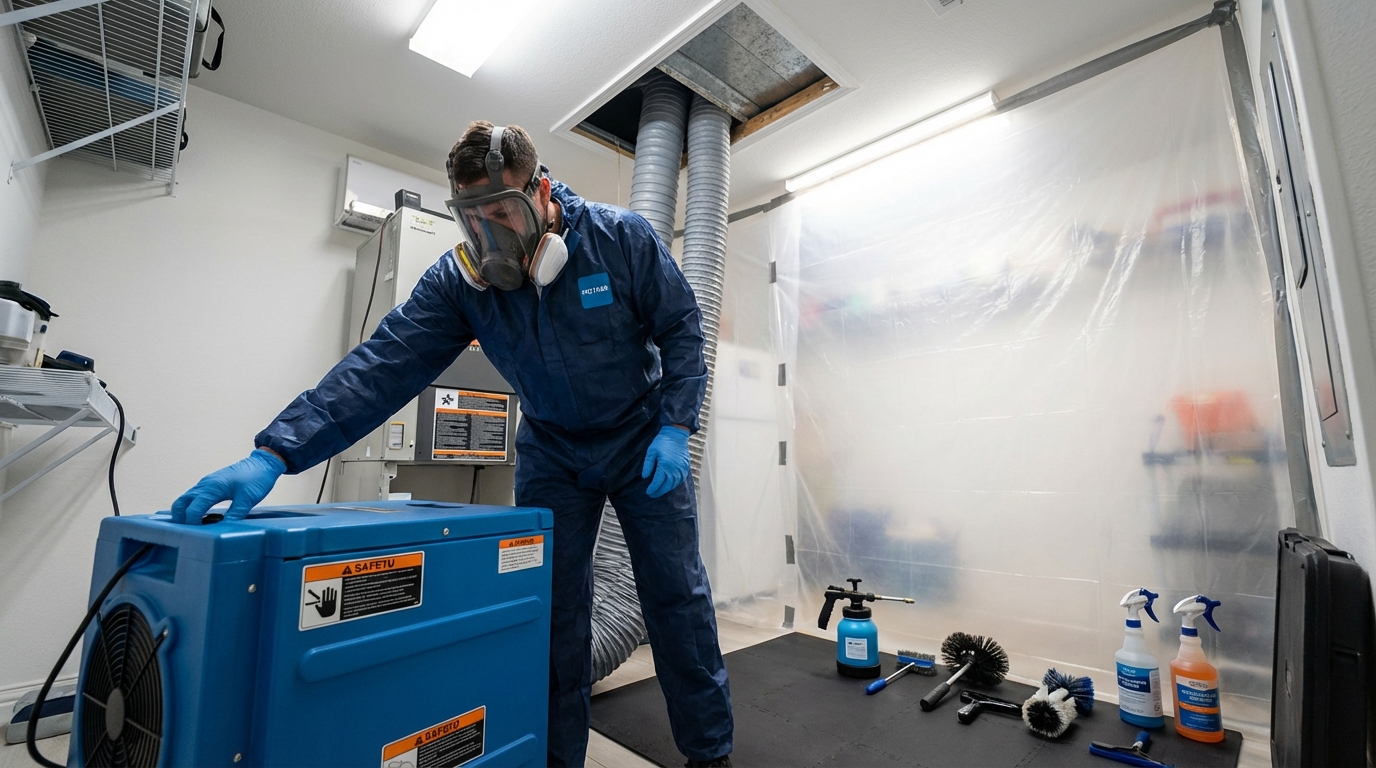
Professional air duct mold removal in Dallas typically follows a structured sequence. It begins with a thorough inspection of the entire HVAC system — not just the visible duct openings but also the air handler, evaporator coil, drain pan, supply and return plenums, and accessible duct runs. The goal of the inspection is to determine the extent of the problem and, critically, to identify the moisture source that enabled the growth in the first place.
Once the scope is understood, affected areas may be isolated using containment barriers. Specialized HEPA-filtered equipment is used to capture airborne spores and prevent cross-contamination to clean areas of the building. Contaminated duct sections, filters, and insulation are cleaned, treated, or removed depending on the severity and material type. Hard-surface ducts can typically be cleaned and treated, while porous materials like fiberglass duct liner may need replacement if mold has penetrated the material.
Why Fixing the Moisture Source Is Not Optional
This step is where many remediation efforts succeed or fail. If the condensate drain is slow, the drip pan is cracked, duct joints are poorly sealed, or attic insulation around ductwork is inadequate, moisture will return — and so will the mold. A thorough remediation process includes identifying and correcting the moisture condition, whether that means resealing duct connections, improving insulation, adjusting drainage, or recommending HVAC modifications to better control indoor humidity levels.
Can Mold in Air Ducts Affect Occupant Health?
The CDC reports that exposure to damp and moldy environments may cause symptoms such as nasal stuffiness, throat irritation, coughing, wheezing, and eye irritation in some individuals. People with existing respiratory conditions, allergies, or weakened immune systems may experience more pronounced effects. Research summarized by the World Health Organization links indoor dampness and mold exposure to increased risk of respiratory infections and asthma exacerbation.
It is important to keep this in perspective. Most healthy adults can tolerate brief exposure to mold spores without serious consequences. However, in a building where the HVAC system circulates air continuously, even moderate mold growth inside ductwork can distribute spores to every room served by the system. For commercial properties with employees or customers on site for hours each day, and for homes with young children or elderly residents, addressing duct-related mold promptly is a practical concern — not an overreaction.
Don’t let mold compromise your indoor air quality. Clean Air Dallas Pro provides thorough inspections and honest assessments for Dallas homes and businesses.
Why Does Mold Come Back After Duct Cleaning?
This is one of the most common frustrations property owners express, and the answer is almost always tied to unresolved moisture. If someone cleans visible mold from a vent cover or even has a basic duct cleaning performed, but the condensation on an uninsulated duct run in the attic continues every day of the cooling season, new growth can appear within weeks. Similarly, a slow drain pan leak that adds a small amount of moisture to the air handler cabinet each cycle will eventually support regrowth even after a thorough cleaning.
Effective prevention means treating remediation and moisture correction as inseparable. A one-time cleaning addresses the symptom; identifying and resolving the moisture pathway addresses the cause. This distinction is one reason Clean Air Dallas Pro evaluates the full system condition during service — not just the visible areas — so recommendations address both current contamination and future risk.
Proactive Strategies for Mold Prevention in HVAC Systems
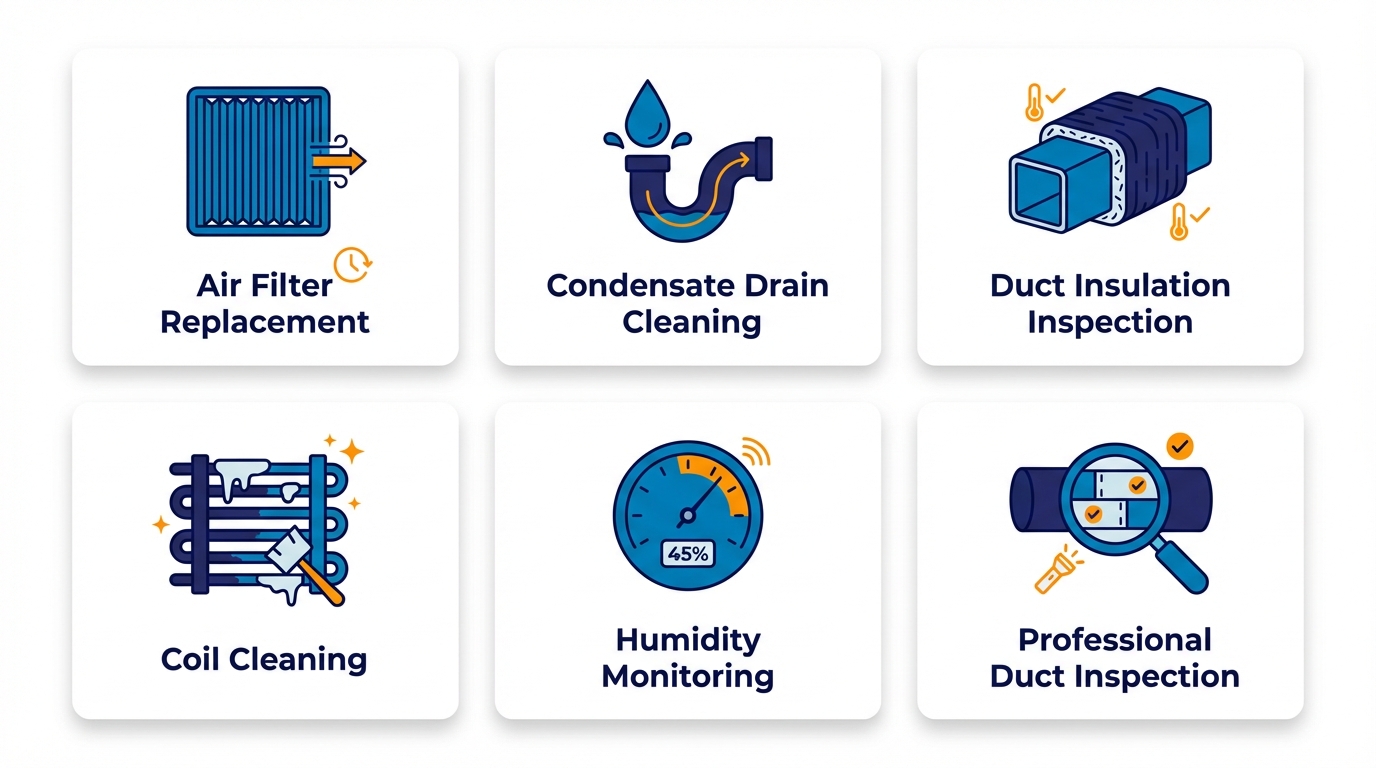
Prevention is consistently more practical and less costly than remediation. Property owners and facility managers in Dallas can take several concrete steps to reduce the likelihood of mold developing inside their duct systems. The U.S. Department of Energy recommends sealing and insulating all duct runs, particularly those in unconditioned spaces, and specifically notes that cooling ducts need a well-sealed vapor barrier to prevent moisture condensation on exterior surfaces.
Ensuring the HVAC system is properly sized for the building is also critical. In humid climates like Dallas, an oversized air conditioner cools the air quickly but does not run long enough to adequately dehumidify, leaving indoor humidity levels higher than they should be. The Department of Energy advises that in very humid areas, proper system sizing and installation are essential for effective humidity control. Regular filter changes, annual coil cleaning, drain line maintenance, and periodic inspection of duct connections and insulation round out a solid prevention approach.
| Prevention Measure | What It Addresses | Recommended Frequency |
|---|---|---|
| Air filter replacement | Reduces dust and organic debris inside ductwork | Every 1–3 months depending on usage |
| Condensate drain line cleaning | Prevents standing water near the air handler | At least annually, ideally before cooling season |
| Duct insulation and sealing inspection | Limits condensation on duct surfaces | Every 1–2 years or after any attic work |
| Evaporator coil cleaning | Removes organic buildup that supports mold near coils | Annually |
| Indoor humidity monitoring | Flags humidity levels above recommended 30–50% range | Ongoing with a hygrometer or smart thermostat |
| Professional duct inspection | Identifies early signs of moisture, growth, or damage | Every 2–3 years or when symptoms appear |
For commercial properties with larger, more complex HVAC systems, scheduling a commercial air duct maintenance plan ensures these technical standards are consistently met across all zones and equipment, rather than relying on reactive service calls after a problem has already developed.
Is Bleach a Safe DIY Solution for Mold in Air Vents?
Many property owners search for quick fixes and wonder whether household bleach or commercial sprays can address mold in ductwork. While bleach can kill surface mold on hard, non-porous materials, it has significant limitations inside an HVAC system. Duct interiors often include porous insulation, flex duct fabric, and areas that are difficult to reach or dry completely. Spraying bleach into these areas can introduce additional moisture without effectively reaching the root of the growth, and residual fumes can circulate through the system.
EPA guidance does not recommend bleach as a primary remediation tool for porous materials. For hard-surface ducts, even if a surface treatment kills visible growth, it does nothing to address the moisture source or spores deeper in the system. Professional remediation uses HEPA filtration, appropriate antimicrobial treatments rated for HVAC use, and mechanical cleaning methods that address contamination more thoroughly than any surface spray.
Comparing Residential and Commercial Remediation Needs
Residential duct systems in Dallas are typically simpler — a single air handler serving one or two zones through flex or sheet metal ducts. The remediation scope is usually more contained, and the property can often be vacated briefly during service if needed. Commercial properties present a different scale. Larger buildings may have multiple air handling units, extensive duct networks running through drop ceilings and mechanical chases, and higher occupancy levels that complicate scheduling and containment.
The EPA’s remediation guide for schools and commercial buildings emphasizes occupant protection during cleanup and recommends containment procedures that prevent mold-laden dust from reaching occupied zones. Clean Air Dallas Pro brings the detailed approach that commercial remediation requires — including system-wide inspection, documented assessment of affected areas, and staged service that minimizes disruption to building operations while ensuring thorough treatment.
How Dallas Property Owners Benefit from a Local, Detail-Oriented Approach
Mold prevention and remediation in ductwork is not a one-size-fits-all service. The combination of building type, duct material, HVAC configuration, insulation condition, and local climate factors all influence what the right approach looks like for a specific property. Working with a local team that understands Dallas-area construction patterns, common attic configurations, and seasonal humidity cycles makes a practical difference in how effectively the work is performed.
| Property Need | How Clean Air Dallas Pro Helps |
|---|---|
| Identifying whether mold is present or suspected | Thorough visual and accessible-area inspection with honest assessment |
| Understanding the moisture source | Evaluation of condensation points, drain function, duct insulation, and sealing |
| Choosing between cleaning and remediation | Clear explanation of what the situation requires — no upselling unnecessary services |
| Preventing recurrence after treatment | Specific maintenance recommendations tailored to the property and Dallas climate |
| Commercial property scheduling | Flexible service planning that accounts for building occupancy and operations |
Whether you need a routine duct cleaning or full mold remediation, Clean Air Dallas Pro delivers honest service tailored to your Dallas property.
When Should You Call a Professional for Duct Mold in Dallas?
Certain warning signs indicate that professional evaluation is warranted rather than a wait-and-see approach. A musty or earthy smell that appears specifically when the HVAC system starts running is one of the clearest indicators. Visible dark patches around supply or return registers — especially if the area feels damp to the touch — should prompt an inspection. If occupants report worsening nasal congestion, throat irritation, or respiratory discomfort that correlates with time spent inside the building, the duct system should be examined as a possible contributing factor.
Other situations that call for professional attention include any known water intrusion event near the HVAC system, discovering standing water in the drain pan or near the air handler, noticing condensation dripping from duct connections, or purchasing or leasing a property where the duct system history is unknown. In all of these scenarios, an experienced local team can inspect the system, provide an honest evaluation, and recommend the appropriate level of service — whether that is a standard cleaning, targeted repair, or full mold remediation.
Frequently Asked Questions About Mold in Air Ducts
Most healthy adults can tolerate brief mold spore exposure without serious health effects. However, when mold is inside the duct system, spores can be distributed continuously throughout the building every time the HVAC runs. Over time, prolonged exposure may cause irritation or discomfort even in otherwise healthy individuals. Sensitive groups — including children, elderly residents, and those with respiratory conditions — face greater risk.
A professional inspection every two to three years is a reasonable baseline for most Dallas properties. If your building has known moisture issues, ductwork in unconditioned spaces, or a history of water intrusion events, more frequent inspections — such as annually before the cooling season — are advisable.
Yes, though it is less common. Dallas winters are relatively mild, and heating systems can still create temperature differentials that produce some condensation. Mold that established during the humid summer months can remain dormant and reactivate when conditions change. Year-round humidity monitoring and proper drainage maintenance help reduce this risk.
Sanitizing treatments can help reduce microbial presence on duct surfaces after cleaning, but they are not a substitute for physical removal of mold growth or correction of the moisture source. Sanitizing is most effective as a supplementary step following thorough mechanical cleaning or remediation — not as a standalone solution.
Flex duct with mold growth on the interior fabric lining is generally more practical to replace than to clean effectively. The porous material traps spores in a way that surface cleaning cannot fully address. Hard-surface sheet metal ductwork, by contrast, can typically be cleaned and treated successfully.
Cost depends on several variables, including the size of the duct system, the extent of the mold growth, the type of duct material, whether insulation needs replacement, and the complexity of the moisture source. Because every situation is different, the most reliable way to understand cost is to request an on-site inspection and estimate from a qualified local provider.
While bleach can kill surface mold on hard, non-porous materials, it has significant limitations inside HVAC systems. Duct interiors often include porous insulation and flex duct fabric where bleach cannot reach effectively. Spraying bleach can also introduce additional moisture and circulate fumes through the system. Professional remediation using HEPA filtration and HVAC-rated antimicrobial treatments is a more thorough and safer approach.
Are you noticing a musty smell when your HVAC system kicks on, or have you spotted discoloration around your vents that keeps returning no matter how often you clean? These are signs worth investigating before the problem spreads further through your duct system. Clean Air Dallas Pro provides honest inspections, clear explanations, and professional remediation services built for Dallas properties and Dallas weather. Contact Clean Air Dallas Pro to schedule an inspection or ask about mold prevention and remediation options for your home or commercial building.
What Our Dallas Customers Say
Laura S. Turner
“I had the pleasure of hiring this exceptional firm to clean my air ducts, and I am really pleased with the outcomes. Their team’s expertise in air duct cleaning is unparalleled. My indoor air quality has improved significantly as a consequence of their painstaking efforts.”
Camille Pearce
“This company was my first choice while searching for ‘air duct cleaning near me’. They are experts at cleaning ducts. Their versatility and dependability are unparalleled.”
Rickey Williams
“My expectations were surpassed by Clean Air Dallas Pro’s vent cleaning service. The crew completed the task with efficiency, and the procedure ran smoothly from beginning to end. My HVAC system’s efficiency and airflow started to alter right away.”

Clean Air Dallas Pro Team
Clean Air Dallas Pro serves residential and commercial property owners across Dallas, TX with professional air duct cleaning, mold inspection, and remediation services. Our locally based team understands the unique climate challenges of the Dallas–Fort Worth area and delivers honest assessments, thorough service, and long-term solutions to protect your indoor air quality. Contact us at (214) 935-5058 or visit our contact page to schedule service.