
Dryer Vent Fire Prevention Safety Guide Dallas TX
Every week, Dallas families load clothes into the dryer without thinking twice — yet hidden behind the wall, lint accumulates load after load, quietly creating the conditions for a devastating house fire. The National Fire Protection Association confirms that lint is the leading material first ignited in home dryer fires, but the encouraging news is that most of these fires are entirely preventable. This comprehensive dryer vent fire prevention safety guide for Dallas TX walks you through everything you need to know to keep your family, home, and property protected.
Estimated reading time: 15 minutes
Key Takeaways
- Clogged dryer vents are a leading cause of residential fires in Dallas and across Texas — and they are almost entirely preventable with proper maintenance.
- Cleaning the lint screen alone is not enough; fine lint accumulates deep inside the vent duct over time and requires professional removal.
- Warning signs like slow drying, burning smells, and excessive heat signal that your vent system needs immediate attention.
- Rigid or semi-rigid metal duct material is significantly safer than plastic or foil accordion-style hoses.
- Most Dallas homes benefit from annual professional dryer vent cleaning, with higher-risk households needing service every six to nine months.
- A simple prevention checklist combining daily homeowner habits with periodic professional service addresses every stage of lint accumulation risk.
- Can a Clogged Dryer Vent Really Cause a House Fire?
- Understanding the Lifecycle of a Dryer Fire
- Why Is My Dryer Taking Longer to Dry in Dallas TX?
- What Happens When You Only Clean the Lint Trap?
- Crucial Dryer Vent Safety Tips for Dallas TX Homeowners
- Warning Signs Your Dryer Vent Is a Fire Hazard
- What Should I Do If My Dryer Smells Like It Is Burning?
- Proper Duct Materials Make a Measurable Difference
- Are Some Dallas Homes at Higher Dryer Fire Risk Than Others?
- How Often Should Dallas Homeowners Clean the Dryer Vent?
- Professional Dryer Vent Cleaning Compared to DIY Efforts
- A Practical Dryer Vent Fire Prevention Checklist
- Frequently Asked Questions About Dryer Vent Fire Safety
- Ready to Find Out If Your Dallas Dryer Vent Needs Attention?
Can a Clogged Dryer Vent Really Cause a House Fire?
Yes, and it happens more often than most Dallas homeowners realize. Every time you run a dryer cycle, small fibers escape past the lint screen and travel into the exhaust duct. Over months and years, that material packs against duct walls, lodges in bends, and accumulates near the exterior vent hood. When airflow is restricted enough, the dryer’s heating element raises the internal temperature beyond safe levels. Lint is highly combustible, and once ignition occurs the fire can travel through the ductwork and into the wall cavity before anyone in the home smells smoke.
The U.S. Fire Administration has confirmed that failure to clean was the leading factor contributing to home clothes dryer fires between 2018 and 2020. The Texas Department of Housing and Community Affairs also explicitly lists clogged dryer vents among the most common residential fire hazards in the state. This is not a rare, worst-case scenario. It is a well-documented pattern that affects homes across Dallas every year, and it is almost entirely avoidable through proper maintenance and periodic professional inspection.
Understanding the Lifecycle of a Dryer Fire
A dryer fire does not happen all at once. It develops through a predictable chain of events that begins long before any visible sign of danger. Understanding this lifecycle helps Dallas homeowners recognize problems early and take action before risk escalates.
Stage by Stage: How Lint Becomes a Fire Hazard
The process starts with lint bypassing the filter. Even a clean lint screen only catches a portion of the fibers released during each cycle. The remaining particles enter the vent duct, where they gradually coat the interior walls. As buildup increases, airflow weakens and the dryer works harder to push hot, moist air out of the home. Internal temperatures rise. The dryer begins running longer cycles to compensate, which generates even more heat. Eventually the temperature inside the duct reaches a point where the compressed lint ignites. Once a flame starts inside a duct run that passes through a wall or ceiling cavity, it can spread into the structure of the home very quickly.
The U.S. Fire Administration notes that a fire originating in a clothes dryer is not classified as a “confined” fire precisely because of its potential to spread beyond the appliance itself. Texas state weatherization field guides reinforce that improper dryer venting and neglected vent maintenance are recognized fire hazards in residential settings. The takeaway for Dallas homeowners is straightforward: lint accumulation is not just a nuisance that slows drying time. It is the fuel source for a fire that builds gradually and can escalate without warning.
Why Is My Dryer Taking Longer to Dry in Dallas TX?
If your clothes need two cycles to dry or come out damp after a full run, the instinct is to blame the machine. In most cases, however, the dryer itself is working fine. The problem is restricted airflow in the vent line. When lint narrows the duct or a crushed hose behind the dryer limits exhaust, hot moist air cannot escape efficiently. The dryer compensates by running longer, which raises the internal temperature and accelerates lint accumulation even further.
Dallas homeowners often notice this symptom first, sometimes months before a burning smell or excessive heat develops. Treating slow drying as an early warning signal, rather than a minor inconvenience, gives you the opportunity to address the issue before it becomes a genuine safety concern. A professional airflow check can determine whether the problem is lint buildup, a kinked transition hose, a blocked exterior flap, or a combination of factors. Clean Air Dallas Pro provides thorough dryer vent inspections that identify the root cause and restore proper airflow, so the dryer operates efficiently and safely.
Is your dryer taking longer than it should? A restricted vent could be the cause — and a potential fire hazard.
What Happens When You Only Clean the Lint Trap?
Cleaning the lint screen before or after every load is essential. The U.S. Fire Administration recommends it as a baseline safety practice. However, many Dallas homeowners assume that this single step is enough. It is not. The lint trap captures the largest fibers, but finer particles slip through and enter the vent duct with every cycle. Over time those particles accumulate in areas that are completely inaccessible from inside the laundry room.
Think of it this way: the lint trap is the first line of defense, not the only one. The vent line, which can run anywhere from four to twenty-five feet through walls, floors, or the attic, collects material that no amount of screen cleaning will remove. Moisture can also cause lint to compact and adhere to the duct interior, creating dense blockages that restrict airflow even further. Without periodic cleaning of the entire vent path, the duct gradually becomes a fire hazard regardless of how diligent you are with the lint screen.
| Maintenance Action | What It Addresses | What It Misses |
|---|---|---|
| Cleaning the lint screen | Large fibers from each load | Fine lint inside the vent duct, buildup at bends, blockages at the exterior hood |
| Vacuuming the lint trap housing | Lint around the screen slot | Deep duct accumulation, crushed hose sections, exterior vent obstructions |
| Professional vent line cleaning | Full duct interior, transition hose, exterior hood, and airflow verification | Nothing significant when performed thoroughly |
Crucial Dryer Vent Safety Tips for Dallas TX Homeowners

Prevention does not require technical expertise. It requires consistent habits and an awareness of what to watch for. Start with the lint filter: clean it before and after every cycle, without exception. Check the exterior vent hood while the dryer is running. You should feel steady airflow and see the flap opening freely. If airflow feels weak or the flap barely moves, that is a sign of internal restriction.
Keep the area around the dryer clear of clothing, cleaning products, and anything that could contact heat. Never run the dryer when you leave the house or while the household is asleep, since unattended operation increases risk if something goes wrong. For homes with longer vent runs, periodic professional cleaning is not optional. It is a necessary part of maintaining safe operation. Dallas homeowners who invest in whole-home air quality and duct maintenance also tend to notice less dust recirculation through the HVAC system, since lint and debris in the laundry area can affect overall indoor air cleanliness.
Warning Signs Your Dryer Vent Is a Fire Hazard
Recognizing warning signs early is the most effective way to prevent a dryer fire. The Texas Real Estate Commission inspection standards identify accumulation inside the vent as a critical deficiency, and for good reason. By the time visible problems appear, the duct may already be significantly restricted.
| Warning Sign | What It Indicates | Urgency Level |
|---|---|---|
| Clothes take more than one cycle to dry | Restricted airflow in the vent line | Moderate — schedule inspection soon |
| Dryer exterior feels unusually hot | Heat is not exhausting properly | High — reduce use and inspect |
| Burning smell during operation | Lint may be overheating or scorching | Urgent — stop using the dryer immediately |
| Musty or stale odor in the laundry room | Moisture is not venting to the exterior | Moderate — check vent path and hood |
| Visible lint around the dryer or vent connection | Seal failure or duct disconnection | High — inspect connection and duct integrity |
| Exterior vent flap does not open during cycles | Blockage at or near the termination point | High — clear obstruction or call for service |
| Laundry room becomes unusually hot or humid | Exhaust air is backing up into the room | High — airflow is severely restricted |
If you notice any combination of these symptoms, the safest response is to limit dryer use until the vent system has been inspected. Clean Air Dallas Pro offers detailed vent inspections that identify the location and severity of blockages, so you know exactly what needs to be addressed.
What Should I Do If My Dryer Smells Like It Is Burning?
Stop the dryer cycle immediately. Do not restart it to “test” whether the smell returns. If it is safe to do so, unplug the dryer or turn off its circuit breaker. Open a window or door in the laundry room to ventilate the space. Check for any visible lint buildup around the lint trap housing, the transition hose behind the machine, and the exterior vent hood. Do not attempt to disassemble the dryer yourself unless you are confident in what you are doing.
A burning smell during dryer operation is one of the most urgent warning signs. It can indicate that lint inside the duct is being heated to the point of scorching, or that a mechanical component such as the drum belt or motor is overheating. In either case, continued operation increases fire risk significantly. Contact a professional to inspect the vent line and the appliance before using the dryer again. This is one situation where waiting is always safer than guessing.
Smelling something burning from your dryer? Do not ignore it. Get your vent system inspected by a professional today.
Proper Duct Materials Make a Measurable Difference
Not all dryer vent hoses are equally safe. The Consumer Product Safety Commission warns that plastic and thin foil accordion-style transition ducts can trap lint in their ridges, collapse behind the dryer, and even melt under high heat. These materials were once common, and many Dallas homes still have them installed. If your dryer is connected with a white plastic hose or a flimsy foil “slinky” duct, replacing it is one of the most impactful safety upgrades you can make.
The U.S. Department of Energy recommends rigid or semi-rigid sheet metal venting material for dryer exhaust. Metal ducts have smooth interior walls that resist lint accumulation, maintain their shape when pushed against a wall, and withstand high temperatures without deforming. Local building codes in Dallas generally follow International Code Council guidelines, which also specify maximum allowable duct lengths and restrict the use of fasteners that protrude into the duct interior, since protruding screws catch lint and accelerate buildup. When Clean Air Dallas Pro inspects a dryer vent system, evaluating the duct material and routing is a standard part of the process. If the existing material creates unnecessary risk, the team can recommend a safer configuration.
Are Some Dallas Homes at Higher Dryer Fire Risk Than Others?
Yes. While every home with a dryer has some level of risk, certain configurations and usage patterns increase it substantially. Homes with long vent runs, especially those routed through the attic or terminating on the roof, are more prone to lint accumulation because the exhaust air travels a greater distance and passes through more bends. Each 90-degree elbow in the duct reduces effective airflow, which means a vent path with three or four turns creates significantly more restriction than a short, straight run to an exterior wall.
Older homes in Dallas may have original ductwork that was installed with materials or routing that no longer meet current safety standards. Homes with large families or heavy laundry volume generate more lint per week, shortening the interval between needed cleanings. Pet owners also face increased risk, since animal hair adds to the volume of fibers entering the vent system. If your home fits any of these descriptions, annual inspection is a reasonable minimum, and more frequent professional cleaning may be appropriate depending on what the inspection reveals.
How Often Should Dallas Homeowners Clean the Dryer Vent?
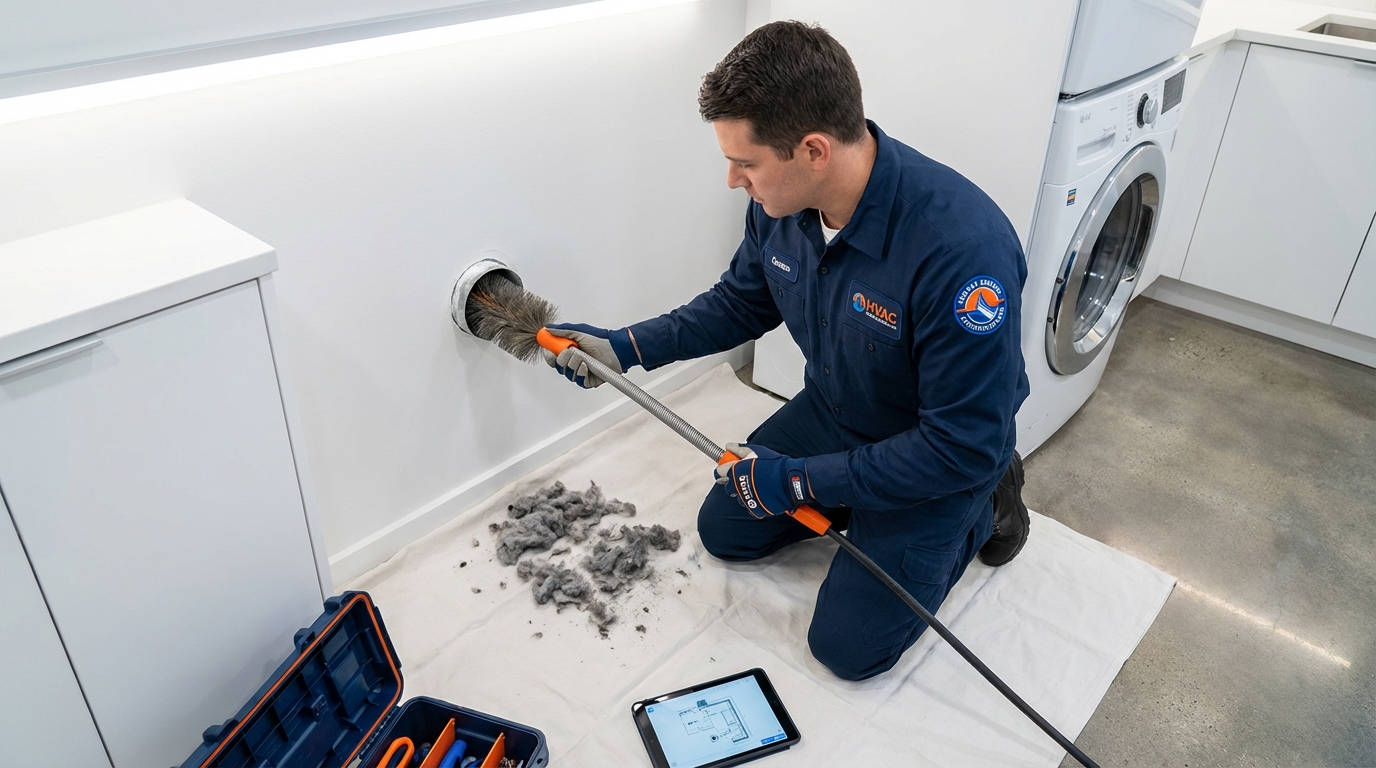
For most single-family homes in Dallas with a standard vent length and average laundry volume, an annual professional cleaning and inspection is a safe baseline. However, the right frequency depends on your specific situation. A household of five running a load every day will accumulate lint far faster than a couple doing laundry twice a week. Homes with longer duct runs, multiple bends, or roof-terminated vents may need service every six to nine months rather than every twelve.
The simplest way to gauge timing is to monitor the warning signs discussed earlier. If drying times are increasing, airflow at the exterior vent seems weaker, or the laundry room feels warmer than usual, those are signals that the vent is due for attention regardless of how long it has been since the last cleaning. Clean Air Dallas Pro helps Dallas homeowners stay on a practical schedule by assessing the vent system condition during each service visit and recommending a timeline based on what the inspection actually shows, not a one-size-fits-all rule.
Professional Dryer Vent Cleaning Compared to DIY Efforts
Homeowner maintenance matters. Cleaning the lint screen, checking the exterior vent, and keeping the area around the dryer clear are all valuable habits that reduce risk between professional cleanings. However, DIY efforts have a ceiling. A household vacuum or brush kit can address the first few inches of the duct, but the ten to twenty-five feet of ductwork hidden behind walls, running through floor cavities, or routed up through the attic is simply out of reach without specialized equipment.
Professional dryer vent cleaning involves rotating brush systems and high-powered vacuums designed to dislodge and extract compacted lint from the entire duct length. A professional inspection also evaluates the condition of the duct material, the integrity of connections, the exterior hood function, and the overall airflow performance of the system. This level of assessment is not something that can be replicated with a consumer-grade brush kit. For Dallas homeowners who want dependable results and clear confirmation that the vent system is safe, professional service is the practical choice. Clean Air Dallas Pro brings experienced technicians and the right equipment to every job, giving homeowners clear answers about the condition of their vent system and confidence that the work has been done thoroughly.
A Practical Dryer Vent Fire Prevention Checklist
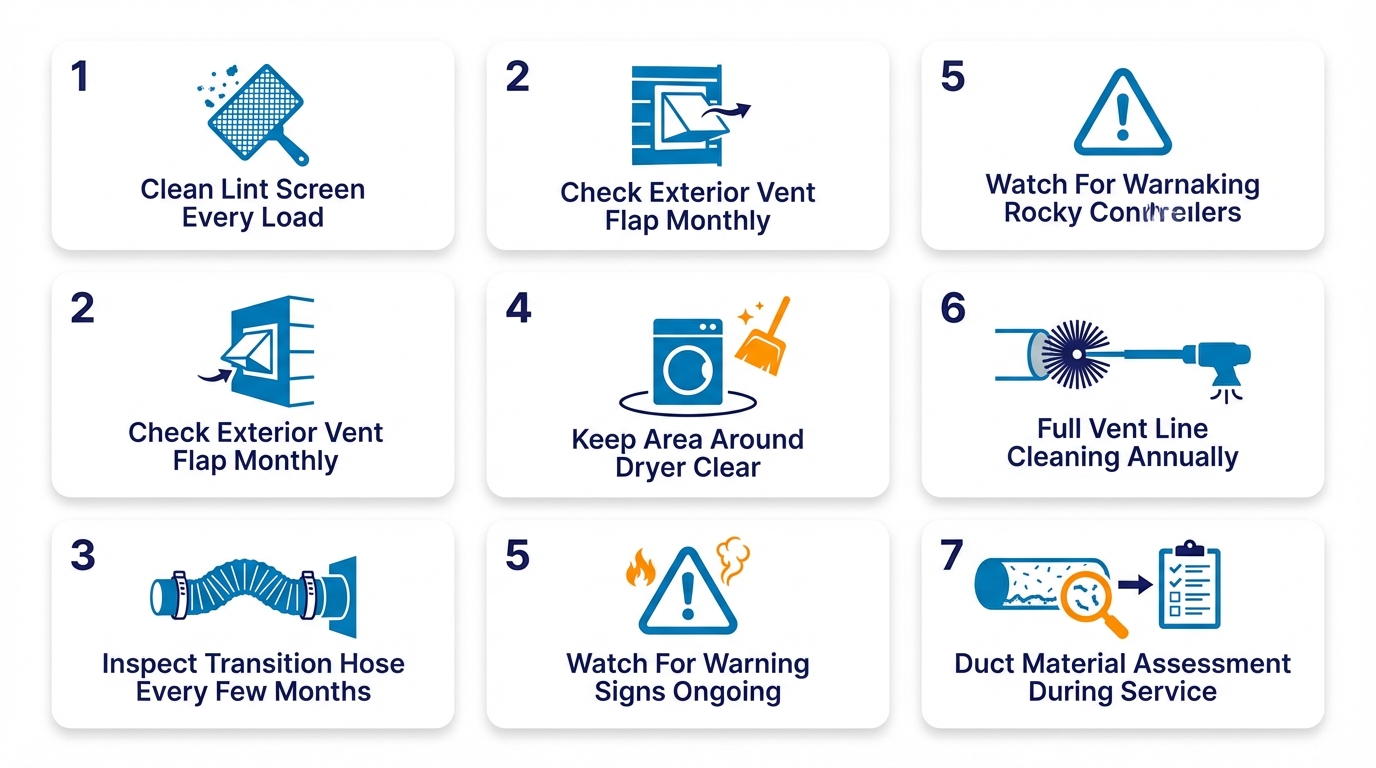
Having a simple checklist posted near the laundry area keeps safety habits visible and consistent. The items below cover both the routine steps homeowners can handle and the periodic tasks that require professional support.
| Task | Frequency | Who Should Do It |
|---|---|---|
| Clean the lint screen | Every load | Homeowner |
| Check exterior vent flap while dryer runs | Monthly | Homeowner |
| Inspect the transition hose behind the dryer | Every few months | Homeowner |
| Verify the area around the dryer is clear | Ongoing | Homeowner |
| Watch for warning signs (heat, odor, slow drying) | Ongoing | Homeowner |
| Full vent line cleaning and airflow verification | Annually or as indicated | Professional |
| Duct material and routing assessment | During professional service | Professional |
This combination of daily awareness and periodic professional service addresses every stage of the lint accumulation lifecycle. It is the most reliable approach to dryer vent fire prevention for any Dallas home.
Protect your Dallas home with professional dryer vent cleaning. Clean Air Dallas Pro is ready to help you stay safe.
Frequently Asked Questions About Dryer Vent Fire Safety
For most Dallas homes, once a year is a reasonable starting point. Households with heavy laundry volume, pets, or long vent runs may benefit from cleaning every six to nine months. Monitoring warning signs between cleanings helps determine the right interval for your specific setup.
Yes. Lint is highly flammable. When it accumulates inside the vent duct and restricts airflow, the trapped heat can reach temperatures high enough to ignite the material. The U.S. Fire Administration identifies failure to clean as the leading contributing factor in home dryer fires.
The lint trap is essential, but it only captures a portion of the fibers released during each cycle. Fine lint passes through and collects inside the vent duct over time. Without periodic cleaning of the entire vent path, buildup will eventually restrict airflow and create a fire hazard.
Rigid or semi-rigid metal venting is the safest option. The U.S. Department of Energy recommends metal duct material over plastic or foil accordion hoses, which can trap lint, collapse, and pose a higher fire risk.
Stop the dryer immediately and do not restart it. Unplug the machine if it is safe to do so, ventilate the laundry room, and check for visible lint buildup around the dryer and vent connection. Contact a professional to inspect the system before using the dryer again.
DIY cleaning handles the lint screen and possibly the first few inches of the duct. For the full vent line, especially runs that pass through walls, floors, or attics, professional equipment is needed to safely and thoroughly clear the buildup. If drying times are increasing or you notice any warning signs, professional service is the safer choice.
Absolutely. If the exterior flap does not open freely when the dryer runs, exhaust air and lint have nowhere to go. This backs heat and moisture into the duct and the laundry room, accelerating lint accumulation and raising internal temperatures. Checking the exterior vent regularly is one of the simplest and most effective safety habits a homeowner can maintain.
Ready to Find Out If Your Dallas Dryer Vent Needs Attention?
When was the last time someone checked the full length of your dryer vent — not just the lint screen, but the duct behind the wall and the exterior hood? If you are unsure, or if you have noticed any of the warning signs described in this guide, a professional inspection is the clearest path to peace of mind. Clean Air Dallas Pro provides thorough, dependable dryer vent cleaning and inspection for homeowners across Dallas. The team brings the right equipment, evaluates the entire vent system, and gives you honest guidance based on what the inspection actually shows. Contact Clean Air Dallas Pro to schedule an inspection or ask about dryer vent cleaning service for your home.
What Dallas Homeowners Say About Clean Air Dallas Pro
“I had the pleasure of hiring this exceptional firm to clean my air ducts, and I am really pleased with the outcomes. Their team’s expertise in air duct cleaning is unparalleled. My indoor air quality has improved significantly as a consequence of their painstaking efforts.”
— Laura S. Turner
“This company was my first choice while searching for ‘air duct cleaning near me’. They are experts at cleaning ducts. Their versatility and dependability are unparalleled.”
— Camille Pearce
“My expectations were surpassed by Clean Air Dallas Pro’s vent cleaning service. The crew completed the task with efficiency, and the procedure ran smoothly from beginning to end. My HVAC system’s efficiency and airflow started to alter right away.”
— Rickey Williams
Our Service Area in Dallas TX

About the Author
Clean Air Dallas Pro Team
The Clean Air Dallas Pro team specializes in professional air duct cleaning, dryer vent cleaning, and indoor air quality services for homeowners across the Dallas TX area. With a commitment to thorough workmanship and honest guidance, our experienced technicians help families breathe easier and stay safer in their homes. Located at 2710 Guillot St, Dallas, TX 75204, we are proud to serve our community. Reach us at (214) 935-5058 or [email protected].